
An Elica chimney suction weak problem is easy to notice. Smoke hangs near the ceiling, the tadka smell reaches the drawing room, and the kitchen walls get oily far sooner than they used to. The motor may still be running, which is why many people ignore the problem for months.
The good news is that weak suction rarely means the chimney is finished. In most homes it comes down to one of seven causes, and a few of them you can check yourself in minutes. This guide walks you through them in the order a technician would actually check, so you do not waste money replacing parts that were never the problem.
Quick answer
Elica chimney suction is weak mostly because of a grease-clogged filter, an oily impeller, or a duct pipe that is too long, bent or blocked. Less obvious causes are a sealed kitchen with no fresh air, a stuck outlet flap, a wrong installation height, or a chimney that is simply too small for your cooking. Clean the filter first, then check the duct and the airflow, and call a technician if suction does not improve.

A 2-minute test before you touch anything
Before you assume the worst, run this simple check. It tells you whether the problem is airflow or the chimney itself.
- Switch the gas burner on a low flame and put on a pan with a little water. Boiling water gives steam without oil smoke, which is easier to watch.
- Run the chimney on the highest speed. Hold a thin tissue or a light sheet of paper near the filter. A healthy chimney pulls it firmly towards the filter.
- Open a window or the kitchen door slightly and test again. If suction suddenly feels much better, the chimney is fine and your kitchen is short of fresh air (see cause 4).
- Listen to the motor. A loud hum, grinding or rattling together with weak suction points to the motor or impeller, not the filter.
Never test with a naked flame near the filter, and never hold paper close to a burner that is lit on high.
Elica chimney suction weak: 7 reasons it happens
1. The baffle or mesh filter is clogged with grease
This is the most common cause in Indian kitchens, where frying, tempering and rotis are daily work. Oil vapour sticks to the filter and slowly closes the tiny gaps that air must pass through. When the gaps shrink, the motor has to pull harder and moves less air.

How to confirm: take the filter out. If it feels sticky, is dark brown or drips oil, it is overdue. In auto-clean models, also check the oil collector cup. A full cup stops oil from draining, and the system backs up.
Fix: clean the filter using the steps in the cleaning section below. If your chimney is ductless and uses a carbon (charcoal) filter, that filter cannot be washed. It has to be replaced when it is saturated.
2. The impeller or motor is coated in oil
Oil that gets past the filter lands on the impeller blades (the fan inside the motor housing). A thin oily layer is enough to upset the balance of the blades, which reduces airflow and adds vibration and noise. Over time the same oil can reach the motor bearings.
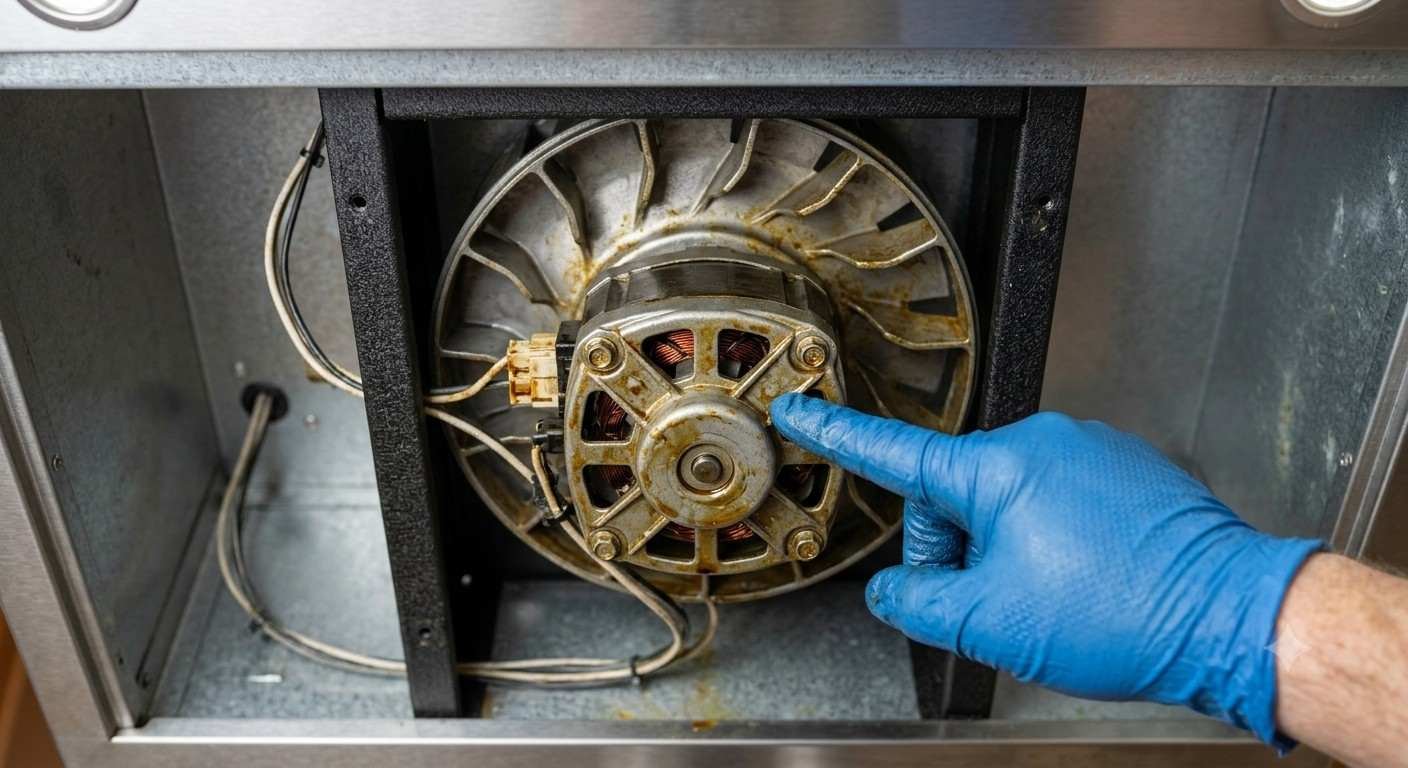
How to confirm: suction stays weak even with a clean filter, and you hear humming, grinding or a rattle. In older chimneys with an AC motor, a weak capacitor can also make the motor spin slower than it should. In BLDC models, a control or sensor fault can do something similar. If your chimney is not starting at all, read our guide on BLDC chimney not turning on.
Fix: this needs a technician. Opening the motor housing yourself risks electric shock and an unbalanced fan.
3. The duct pipe is too long, too bent or blocked
A chimney does not just pull air, it also has to push it out through the duct. Every extra metre of pipe and every sharp bend adds resistance. Many kitchens are fitted with a long, twisting pipe just to reach the outer wall, and the suction on paper never reaches the stove in reality. Guidance from installers and chimney guides is consistent on this point: keep the pipe short, keep it wide, and avoid more than two bends. You can read a good summary in this Houzz India guide to ducted chimney installation, and Bosch's hood fitting guide lists the same warning signs.
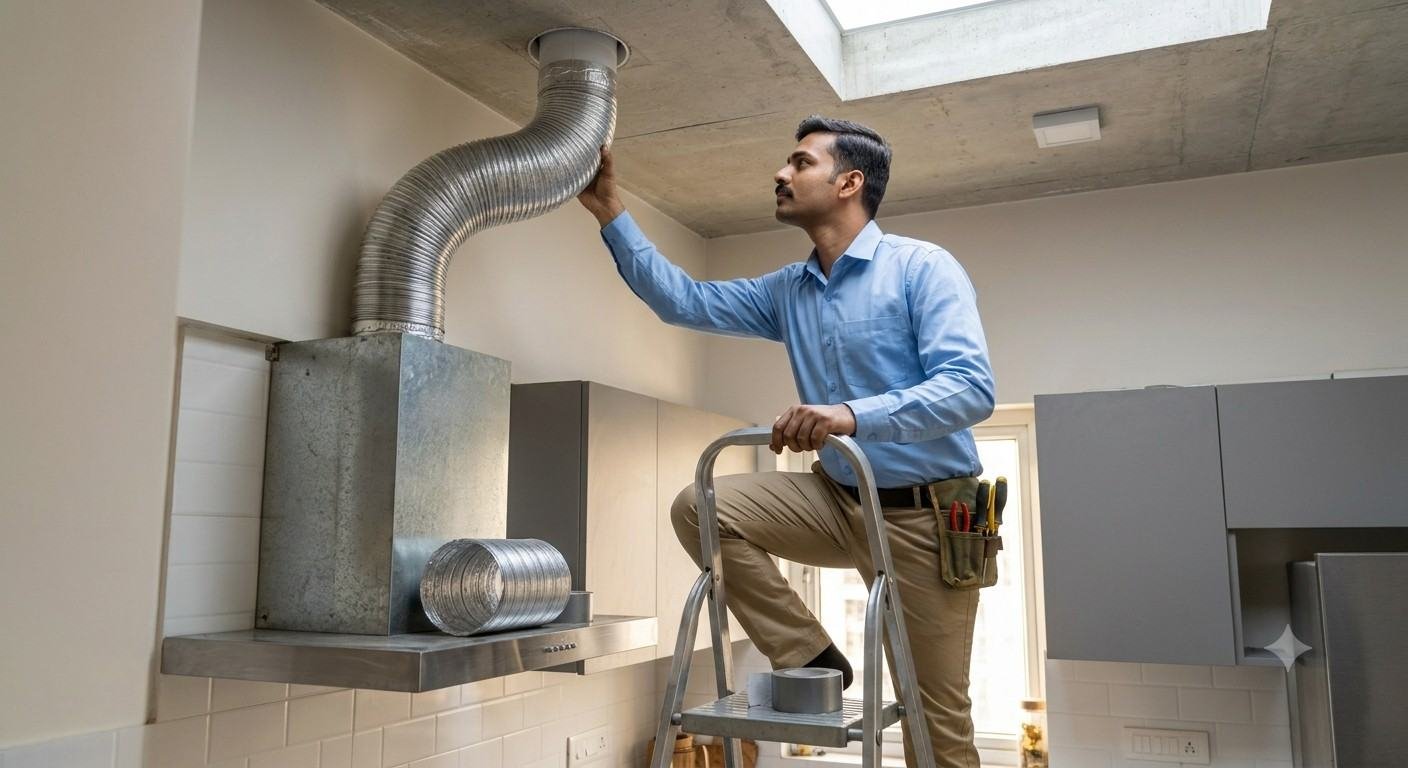
How to confirm: look at the pipe route. Sharp 90-degree elbows, a flexible corrugated pipe that sags, dents, or a pipe thinner than the chimney outlet are all red flags. Grease and lint inside the pipe can also narrow it over the years.
Fix: shorten the route, replace sharp elbows with gentler bends, use a smooth pipe of the right diameter, and clean out the inside. This is a job for a technician, because the pipe is usually above head height and must be sealed properly at the joints.
4. The kitchen has no fresh air coming in
A chimney removes air from the kitchen, so the same amount of air must come back in from somewhere. In modern flats with closed windows, sealed doors and an exhaust fan already running, the chimney ends up fighting against a vacuum it created itself. The result is weak suction, a whistling sound at gaps, and smoke that still escapes into the room.
How to confirm: the window test from the start of this guide. If suction improves when you open a window or door a little, this is your cause.
Fix: crack a window or keep the kitchen door slightly open while cooking. Placing a window on the side opposite to the chimney helps the airflow move across the stove, not around it. Avoid a strong fan blowing across the hob, because it pushes smoke sideways and also disturbs the gas flame.
5. The chimney is mounted too high, too low or is too small for the hob
Position matters as much as power. If the chimney sits too high above the burners, the smoke spreads before it is caught. If it is too small for the hob, the outer burners lose smoke from the edges. If it is mounted too low, you risk heat damage and an unsafe working space.
How to confirm: check your chimney manual for the recommended height above the hob, and compare the chimney width with your cooktop width. Smoke escaping at the sides or the front is the usual sign of poor coverage.
Fix: a technician can re-mount the chimney at the correct height. If the width does not match your hob, a bigger model or extra use of the back burners may be the only practical answer.
6. The outlet flap or outer vent is stuck or choked
Ducted chimneys usually have a non-return flap or a vent cover at the end of the pipe. If the flap is jammed with grease, or if lint, dust or a bird's nest has built up at the outer wall opening, the air cannot leave properly. Sometimes cooking smells even drift back into the kitchen.
How to confirm: with the chimney running, check if the flap opens fully, and look at the outer wall vent for blockage. Do not climb outside on a ladder alone, especially in a high-rise building.
Fix: clean or replace the flap and clear the vent. In apartments, ask your technician to handle the outer opening.
7. The chimney does not match your cooking style
A chimney that suits light cooking may struggle in a home with daily deep frying, grilling or large-batch cooking. Closed kitchens and long duct runs also need more suction than the number on the box suggests. Indian cooking is oil and spice heavy, so a higher suction rating than the bare minimum is the safer choice. If you want to avoid the filter habits that quietly cut suction, NDTV Shopping's guide to filter cleaning mistakes is a useful read.
How to confirm: if everything else checks out and the chimney was never strong in your kitchen, mismatch is likely.
Fix: improve the duct and airflow first, use the highest speed while frying, and switch the chimney on a minute before you start cooking. If it is still weak, an upgrade may be the honest answer, and a good technician will tell you so instead of selling you a repair that will not help.
Not sure which cause applies to you?
Tell us the chimney model, the sound it makes and your city. We will help you work out the next step.
Match your symptom to the likely cause
| What you notice | Most likely cause | What to do first |
|---|---|---|
| Smoke lingers, motor sounds normal | Clogged filter or blocked duct | Clean the filter, then check the pipe |
| Weak suction with humming, grinding or rattling | Oily impeller or worn motor | Stop using it and book a technician |
| Better when a window is open | No fresh air in the kitchen | Open a window or door while cooking |
| Weak since the day of installation | Long or bent duct, wrong height or size | Have the installation checked |
| Smell returns into the kitchen | Stuck flap or choked outer vent | Clear the vent and check the flap |
| Oil dripping from the chimney body | Full oil cup or choked drain | Empty the cup and clean the filter |
| Chimney does not start | Power, control or motor fault | Check the plug and switch, then call us |
How to clean the filter safely at home
Filter cleaning is the one repair most people can do themselves. Do it properly, and you may get a noticeable improvement in suction on the same day.
- Switch off the chimney and unplug it. Wait until the lights and the motor have fully stopped.
- Remove the filter by pressing the latch or sliding it out. Handle it carefully, because the edges can be sharp.
- Soak it in hot water with a good dishwash liquid or a mild degreaser for 20 to 30 minutes. Heavy grease may need a second soak.
- Brush gently along the mesh with a soft brush. Do not use a steel scrubber, because it can damage the surface.
- Rinse well and dry fully before refitting. A wet filter attracts more dust and oil.
- Wipe the visible inner area and empty the oil cup if your model has one.
- Refit the filter firmly, then run the chimney and repeat the tissue test.
When to call a technician
Book a technician if any of these apply, because DIY cleaning will not fix them:
- Suction is still weak after a proper filter clean
- You hear humming, grinding or rattling from the motor
- There is a burning smell or visible sparking, in which case switch off the power at the plug and stop using the chimney
- The duct pipe needs shortening, replacing or cleaning
- The chimney does not switch on or the speed controls do not respond
- Oil is leaking from the body or the oil cup
At Elica Appliance Repair, the technician checks the chimney first and finds the actual fault. You are told what is wrong and what the repair involves before any work starts, and work begins only after you approve it. Our service began in Mumbai in 2002, and you can see the full range of Elica chimney repair services on the service page.
We are an independent repair service, not an authorized Elica service centre. If your chimney is still under manufacturer warranty, check your warranty terms before you book an independent visit.
Is your hob also giving trouble?
Chimney and hob problems often show up together, because the same oil and heat affect both. If your flame has turned yellow or uneven, read our guide on why a hob flame turns yellow and how to fix it, or see our hob repair service.
What to check on your Elica model
Elica chimneys are sold in different types, and the right fix depends on which one you own. Before you clean or call anyone, spend a minute noting these details. They also help us give you a faster answer on call or WhatsApp.
- Model number: look for the sticker inside the chimney body or on the first page of the manual.
- Filter type: baffle, mesh, or a filterless or auto-clean design. This decides how you clean it.
- Ducted or ductless: ductless models use a carbon filter and need regular replacement, while ducted models depend heavily on the pipe route.
- Motor type: older models usually have a standard AC motor, and newer ones may use a BLDC motor.
- Warranty status: check your card before an independent technician opens the unit.
Weak suction is not a fault of any one brand. Every chimney loses suction when grease builds up or the duct is wrong. What matters is finding the real cause on your Elica chimney instead of guessing.
Keep suction strong: a simple schedule
| How often | What to do |
|---|---|
| Every cooking session | Switch the chimney on a minute before you start and keep it running a few minutes after you finish |
| Weekly | Wipe the outer body and the area around the hob |
| Every 2 to 4 weeks (heavy frying) or monthly (lighter cooking) | Remove and wash the filter, empty the oil cup |
| Every 6 to 12 months | Professional check of the motor, impeller and duct pipe |
| When the carbon filter is saturated | Replace it (ductless models only) |
Cold weather deserves a mention here. In winter, oil vapour tends to condense faster on cool surfaces, and many people cook heavier food, so filters often clog sooner than in summer. If you are cleaning the kitchen before a festival, include the chimney filter in the list. A quick filter wash takes less time than wiping oily tiles later.
Where we provide chimney service
We offer doorstep service where available in Mumbai, Navi Mumbai, Thane, Pune, Hyderabad, Bangalore and Gurugram. Service depends on your pin code, so please check on the service areas page or message us with your city. Our team is reachable from 8:00 AM to 11:00 PM, all days.
Frequently asked questions
Why is my Elica chimney suction weak even after cleaning the filter?
If suction is still weak after a proper filter clean, the cause is usually further inside the system. Check for oil on the impeller, a long or bent duct pipe, a stuck outlet flap, or a kitchen with no fresh air. A technician can check these quickly with the chimney running.
Is weak suction a common problem in Elica chimneys?
Weak suction affects every chimney brand, because it mostly comes from grease build-up, duct problems and poor airflow in the kitchen. If your Elica chimney has lost suction, start with the filter, then check the duct pipe and the motor. Keep your model number handy when you contact a technician.
How often should I clean my chimney filter?
For homes with daily frying and tempering, every 2 to 4 weeks is a sensible target. For lighter cooking, once a month is usually enough. If you see oil on the filter or notice smoke lingering, clean it sooner.
Can a long duct pipe reduce chimney suction?
Yes. Every extra metre of pipe and every sharp bend adds resistance, so less air reaches the outside. Keep the route as short and as straight as possible, with no more than two gentle bends.
Does opening a window really help chimney suction?
It can. A chimney removes air from the kitchen, and that air has to be replaced. In sealed kitchens, a slightly open window or door lets fresh air in, so the motor does not work against a vacuum.
Should I repair or replace a chimney with weak suction?
Repair is usually enough when the cause is a dirty impeller, a worn part or a duct problem. Replacement makes sense when the chimney is too small for your cooking, or when repair cost keeps adding up. A good technician will explain the fault first, so you can decide.
Is it safe to run a chimney with a burning smell?
No. Switch it off, unplug it and stop using it until it has been checked. A burning smell can point to a motor, wiring or capacitor problem that should not be ignored.
Need your chimney checked?
Share your city and the problem. We diagnose first and explain the fault before any repair begins.
Elica Appliance Repair is an independent appliance repair business. We are not affiliated with, authorized by, or an official service centre of Elica or any other manufacturer. Brand names are used only to describe the appliances we service. You can also read more about us, browse our full list of services or visit our blog for more repair guides.